The problem
It's never
the software
Odoo can run almost any business. What it cannot do is guess how yours works.
01
Processes get documented as they should be, not as they are
The version in the specification is the tidy one. The real one has the exception nobody wrote down, the step that exists because a customer once complained, and the spreadsheet that quietly holds it all together.
02
Data structures get borrowed
A standard template is applied, your business is bent to fit it, and two years later nobody can produce the report the owner actually wants — because the data was never shaped to answer that question.
03
Everything goes live at once
The whole company switches on a Monday, nobody is trained on the version that shipped, and the project is judged a failure in its first fortnight.
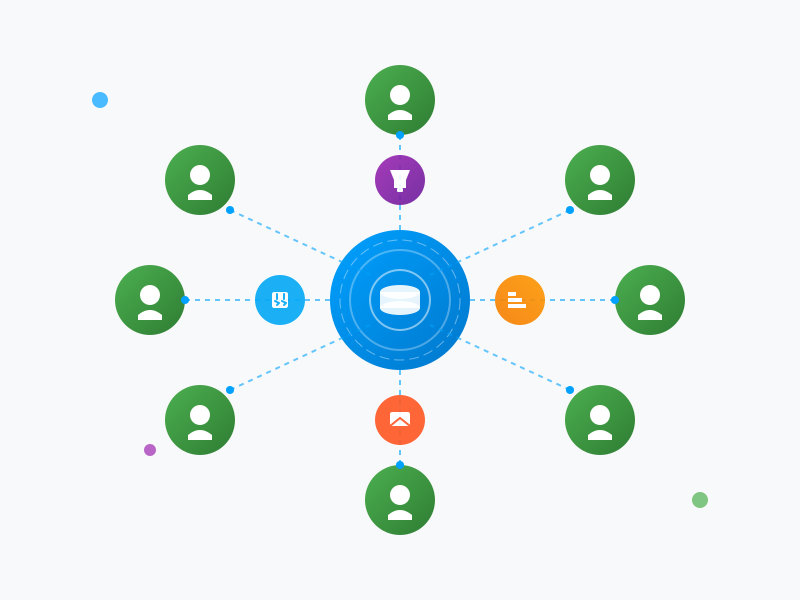
Trigger, owner, information, failure.
Step one
We start by watching how you work
Before anything is configured, we go through your operation process by process: what triggers each one, who touches it, what information moves, where it stalls, and what happens when something goes wrong.
We are specifically looking for the parts that never make it into a specification — the manual workaround, the undocumented approval, the exception that turns out to be 30% of your volume.
What you get
A written map of your processes as they actually run, in your own terms. You can correct it before a single thing is built on it, and it is yours to keep whichever direction you go.

Before we build
We tell you what we find
Our AI agents analyse your data and your processes together and report what is actually there — before implementation starts, because moving a broken process into a new system produces a faster broken process.
Nothing is changed without your decision. We show you what we found and what it would cost to fix; you choose what carries over.

How we build
One phase
at a time
Configuration takes us days rather than months, and that is what makes this affordable.
Speed is ours; pace is yours.
Scope and acceptance agreed first
+Each phase has a defined scope and acceptance criteria written down before work begins, so "finished" means the same thing to both of us.
Your old system keeps running
+We run in parallel until the new phase is proven, so there is never a day when your business depends on something untested.
A decision point at the end of each phase
+You choose whether to start the next one. Nothing is contracted as a single lump you cannot get out of.
Access designed, not defaulted
+Permissions, record rules and approval limits are set up deliberately, so people see what they need and nothing else.
Reversible
+Backups and rollback capability at every phase boundary, tested rather than assumed.
Your people trained on what actually shipped
+Phase by phase, while the amount to learn is still small. Training happens against the configuration that went live, not a demo database.
Moving data as part of your implementation? See how migration works →
Support
We keep
watching
Going live is where most partners stop paying attention. It is where the expensive problems start.
Error detection
Our monitoring agent watches for failed scheduled jobs, integration failures, permission errors and performance degradation — and raises them to a named person on our team.
Data loss detection
Records that should exist and do not, relations that have broken, totals that no longer reconcile, imports that silently dropped rows. Found by checking, not by waiting for someone to notice.
A person who knows your system
Questions go to the people who built it, not to a queue.

 Odoo implementation, migration and customisation.